
Welding Aluminum Air Conditioning Fittings
A damaged aluminum A/C fitting can cause a frustrating delay when the right replacement part is hard to find. Some fittings may take weeks to arrive, while the rest of the air conditioning system remains out of service. Repairing the fitting can offer a much faster route when the original aluminum is still suitable for repair.
Super Alloy 5 can be used to join aluminum air conditioning fittings with just a propane torch. This process is especially useful when the two pieces differ in size because the flux helps show when the aluminum has reached the 600°F working temperature.
Fit the Aluminum A/C Parts Together
Start by fitting the two aluminum pieces together and creating a seam where the filler will be applied. Super Alloy 5 flux removes impurities from the repair area, so the aluminum does not require pre-cleaning before this repair.
Warm the end of the filler rod just enough to help the powder flux stick to it. Dip the rod into the flux jar, then transfer a generous amount of flux to the seam.
At this point, the goal is to heat the aluminum rather than the rod. The parent metal must supply the heat that allows Super Alloy 5 to flow into the joint.
Keep the Torch Moving on Thin Aluminum
Air conditioning fittings often combine thin tubing with a heavier aluminum connection. Those two pieces will not heat at the same rate, so torch placement matters.
Move the flame continuously across the aluminum to avoid overheating the thinner section. At the same time, keep enough heat on the assembly to prevent the temperature from falling. Aluminum sheds heat quickly. If you remove the torch for too long, the parts may cool below the working range and need to be preheated again.
A steady, moving flame gives you more control than repeatedly heating and cooling the joint.
Give the Larger Fitting More Heat
When joining aluminum pieces of different sizes, direct more of the torch heat toward the larger fitting. Its greater mass takes longer to reach working temperature than the smaller section.
Broad heating allows both pieces to warm together while the heavier fitting receives the extra heat it needs. This helps the two sides of the joint reach the working range at roughly the same time.
The thin piece does not need the same amount of direct flame. Heat traveling from the larger fitting helps bring it up to temperature without putting as much stress on the lighter aluminum.
Wait for the Flux to Become Thin and Watery
Super Alloy 5 flux provides a useful visual cue during the repair. As the aluminum warms, watch the flux at the seam. Once it becomes thin and watery, the joint is ready for the filler rod.
Lay the rod into the seam and continue moving the torch. The filler follows the heat, which lets you guide it along the connection by controlling the flame. Add more flux as needed while working around the joint.
This is especially helpful on fittings with curved seams because the filler can be worked around the connection instead of being deposited in one spot.
If the Aluminum Rod Balls Up, Keep Heating the Fitting
A ball of filler sitting on the surface tells you that the aluminum has not reached 600°F. The rod cannot flow across parent metal that is still too cool.
Continue heating the aluminum while keeping the flame in motion. Once the parent metal reaches the working range, the filler can spread through the flux and into the seam.
This distinction is important. Trying to melt the rod directly with the flame does not solve a cold joint. The fitting itself needs enough stored heat to flow the filler.
Let the Joined Fittings Cool Before Cleanup
Once the seam has been filled, allow the aluminum fittings to cool naturally. Residual flux can then be washed away with warm water and a stainless steel brush.
Super Alloy 5 is an all-position rod, so the same process can be useful when an A/C fitting cannot be placed flat on a workbench. The alloy can also be applied with many common torch setups, depending on the amount of aluminum that needs to be heated.
When an A/C Fitting is Worth Saving
Waiting for a replacement makes sense when the original fitting is beyond repair. A sound fitting with a damaged joint presents another option. Rejoining the aluminum can keep the existing component in use and avoid waiting weeks for a replacement to arrive.
The most useful lesson from this job is how the two pieces share heat. The larger fitting gets more attention from the torch, the smaller section warms alongside it, and the flux tells you when both are ready for Super Alloy 5. Once the flux turns watery, the seam can be filled and the A/C fitting can move toward its next service rather than the scrap bin.
Disclaimers:
Please visit https://www.aws.org/Standards-and-Publications/Free-Resources/#YourResources prior to using our welding products, and adhere to all AWS welding safety guidelines.
Further product safety information is available at https://muggyweld.com/safety-guidelines
Muggy Weld LLC shall not be liable for any loss, injury, claim, liability, or damage of any kind resulting in any way from (a) your use of this Site, (b) any services or products obtained from this Site, (c) any errors in or omissions from this Site, (d) the unavailability or interruption of this Site or any features thereof, (e) any content contained on this Site.
MSDS sheets available with purchase from MuggyWeld.com, upon request.
Updated 8/10/26
Check Out These Products
-
Sale!
Super Alloy 1 Low-Temperature Solder
Price range: $55.00 through $780.00350º F multi-metal solder joins pot metal and all white metals, in any combination🌡 Melting Temperature 350 / 177 ⇄︎ Bonding Strength 20000 psi, 137.89 MPa -
Sale!
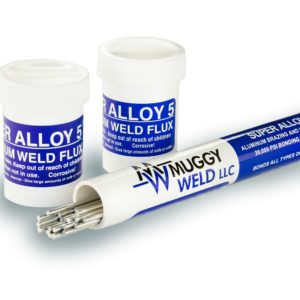
Super Alloy 5 Aluminum Welding and Brazing Rod
Price range: $55.00 through $980.00600°F aluminum welding, brazing, and soldering rod. Ideal for aluminum boat repair and cast aluminum.🌡 Melting Temperature 600 / 317 ⇄︎ Bonding Strength 30000 psi, 206.84 MPa -

SSF-6 Silver Solder Rod: Flux-Coated SSF-6 56% Brazing Rod
Price range: $135.00 through $3,000.00High-Strength, 56% Silver Solder Rod🌡 Melting Temperature 1150 / 621 ⇄︎ Bonding Strength 70000 psi, 482.63 MPa 🔧︎ Sizes Available (in) 1/16 🔧︎ Sizes Available (mm) 1.58